January 2026
Reference
Villa B


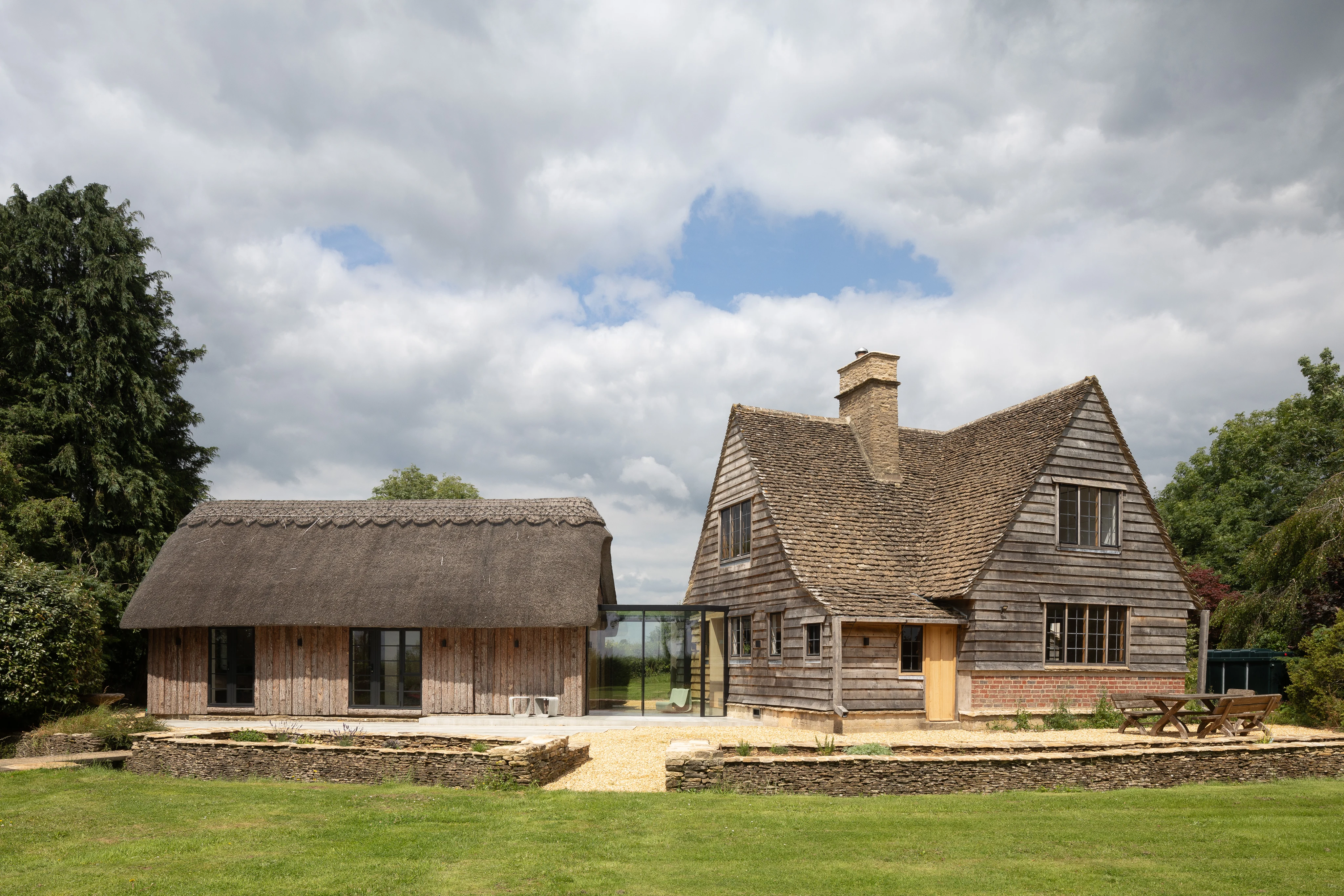
Some places wear their history like a second skin. Studio Cottage in Cirencester, on the edge of the Cotswolds Area of Outstanding Natural Beauty, is such a place. In the 1930s, arts and crafts architect Alfred Hoare Powell designed the timber-framed buildings as a summer retreat and pottery studio – a sanctuary where he and his wife Louise created Wedgwood ceramics. Nearly a century later, this ensemble tells a new story: one of careful transformation, in which glass becomes the connecting element between past and present.
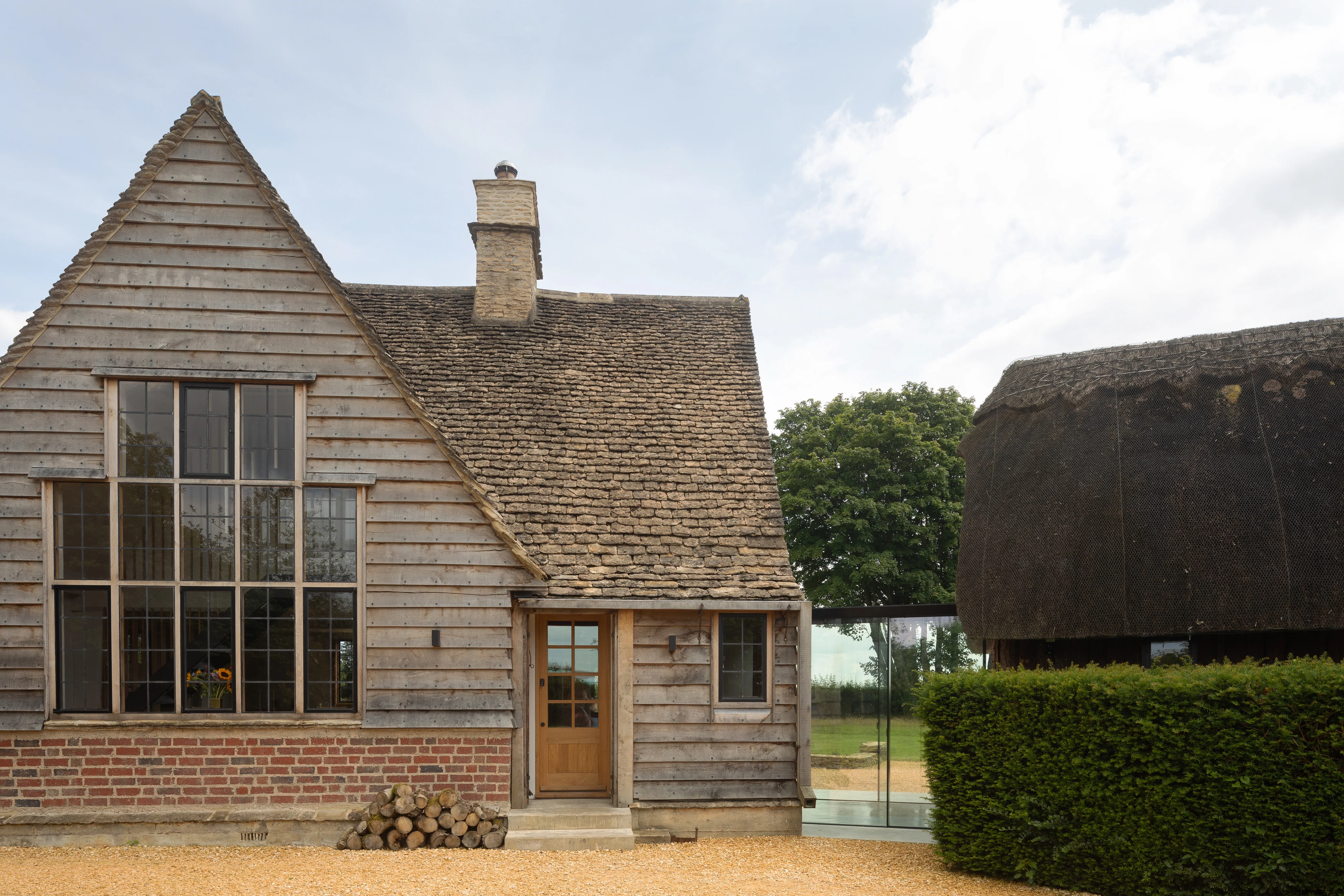
The task was as demanding as it was complex. Two largely dilapidated Grade II-listed timber buildings – a cottage and a thatched studio – were to be combined into a single family home without losing their historic character. Architect Rebecca Milton, as the former owner, developed the original design vision and secured listed building consent. A historic photograph showing that the two buildings had once been physically connected proved to be the decisive factor. Ashton Architecture took over in 2020, guiding the project to completion in collaboration with the new owner – a work recently recognised with an RIBA Regional Design Award.
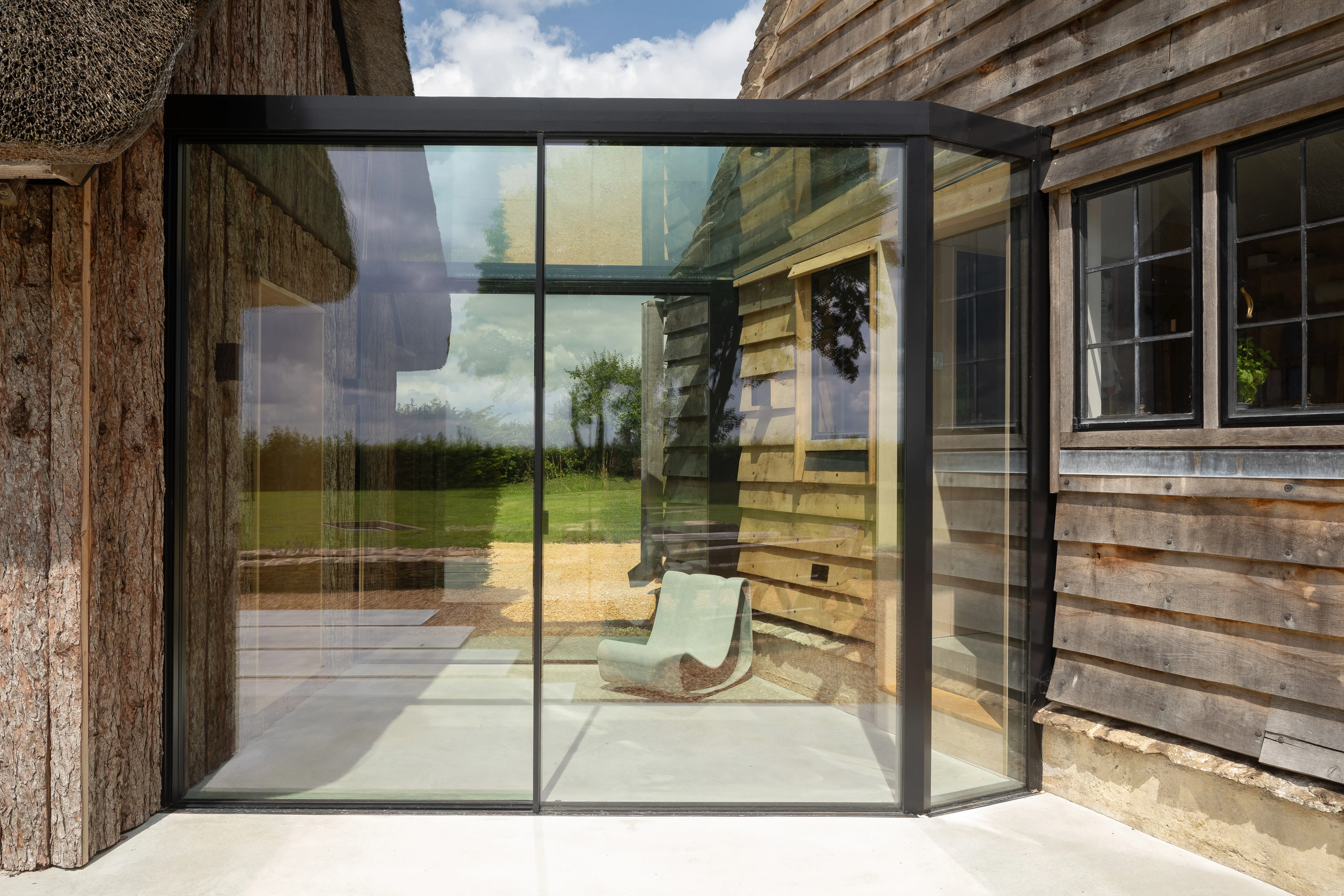
At the heart of the transformation is a glazed link building with frameless sliding windows by Sky-Frame – a contemporary structure with a purpose-designed kinked geometry that follows the two timber-framed buildings rather than dominating them. Light and warmth flow into the formerly uninhabitable thatched studio, the usable floor area growing to 235 square metres. An intervention that was considered nearly impossible for a building of such historic significance.
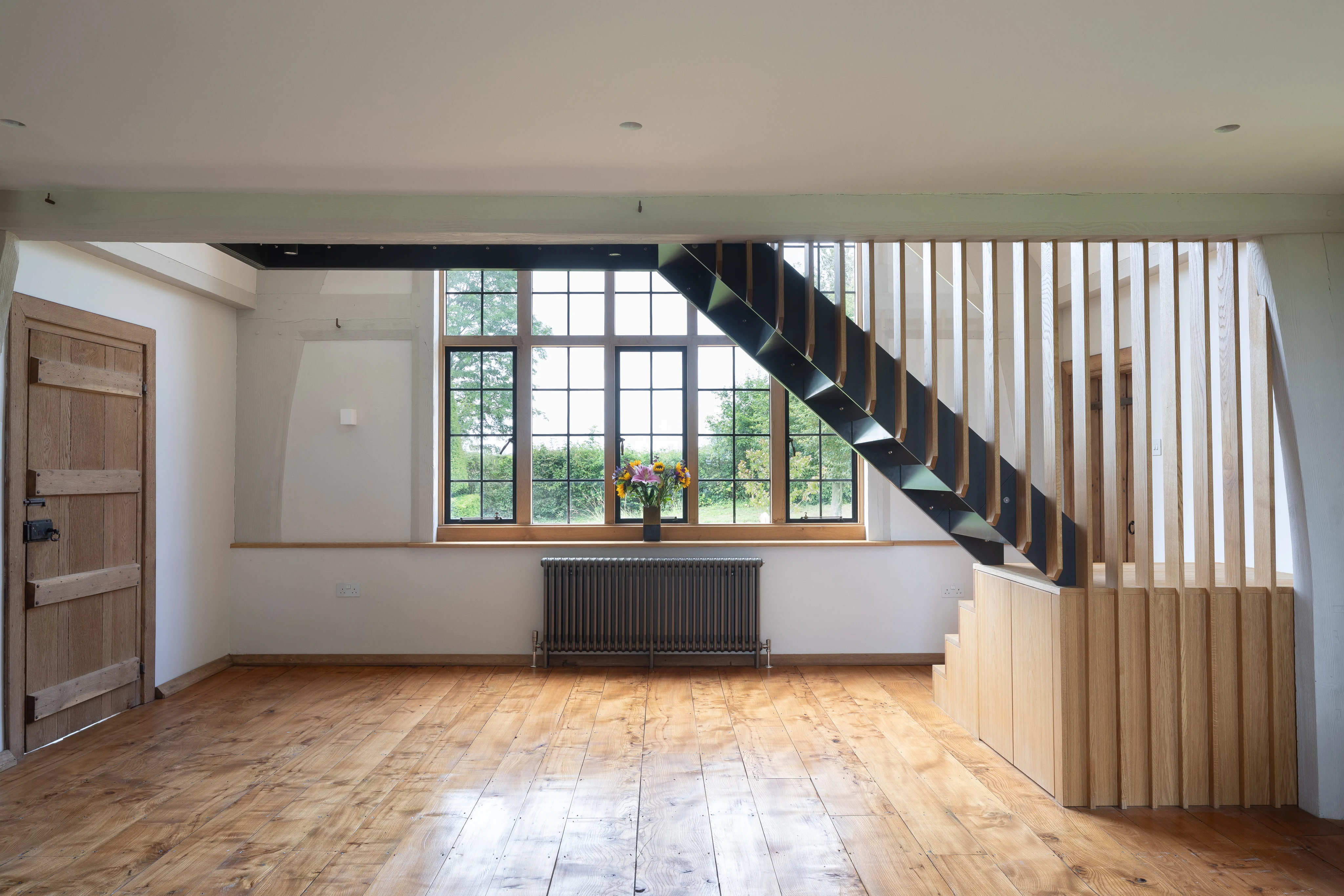
The careful uncovering of hidden layers revealed surprises that only patience and dedication can bring to light. Behind old cladding, original doorways and windows emerged. A large, concealed window on the north elevation was reinstated, restoring the cottage's double-height living area to its original generosity. The creosote-blackened timber cladding was sanded back, and the painted brickwork was exposed – a gentle return to more natural, lighter finishes that lend the spaces a newfound lightness.
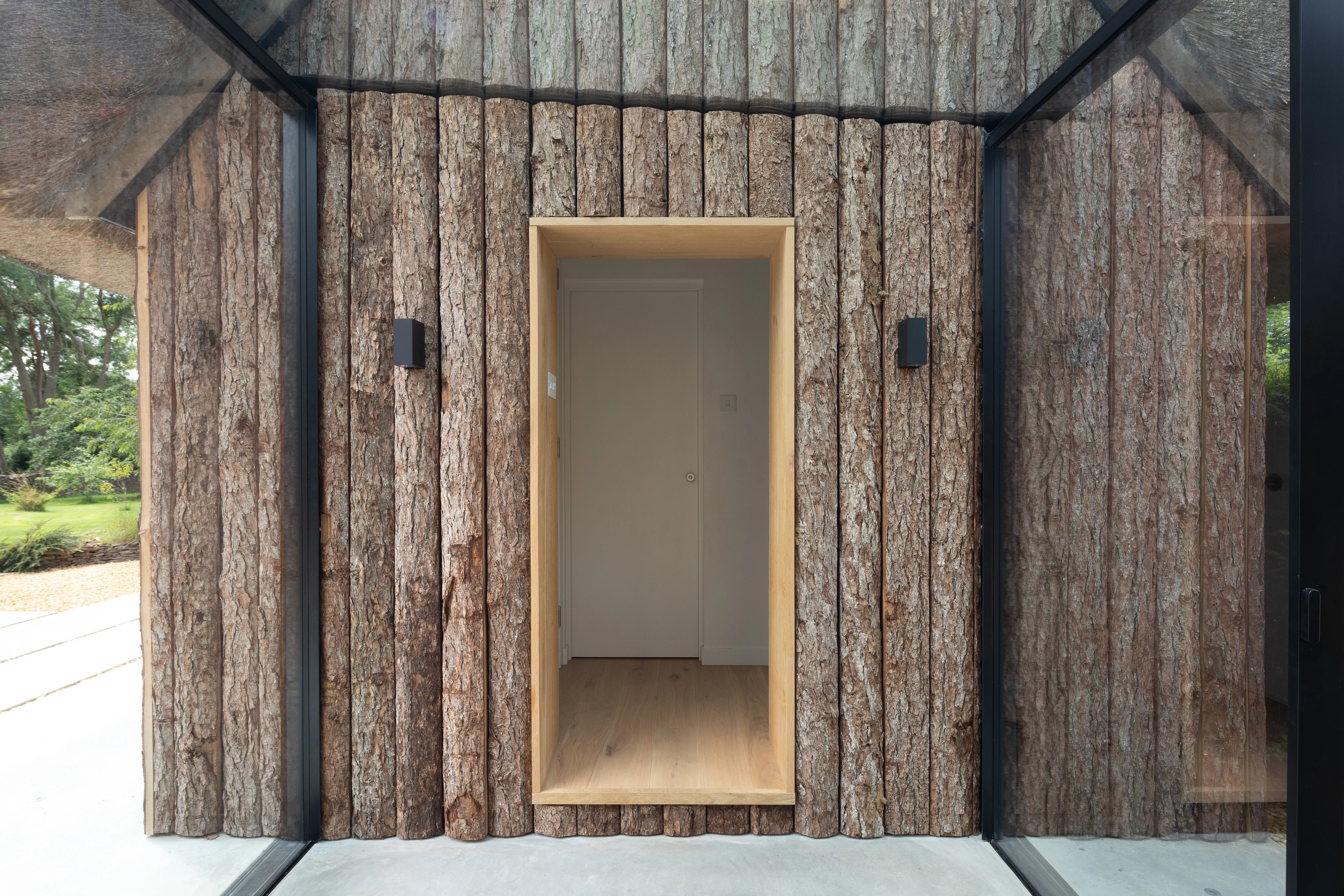
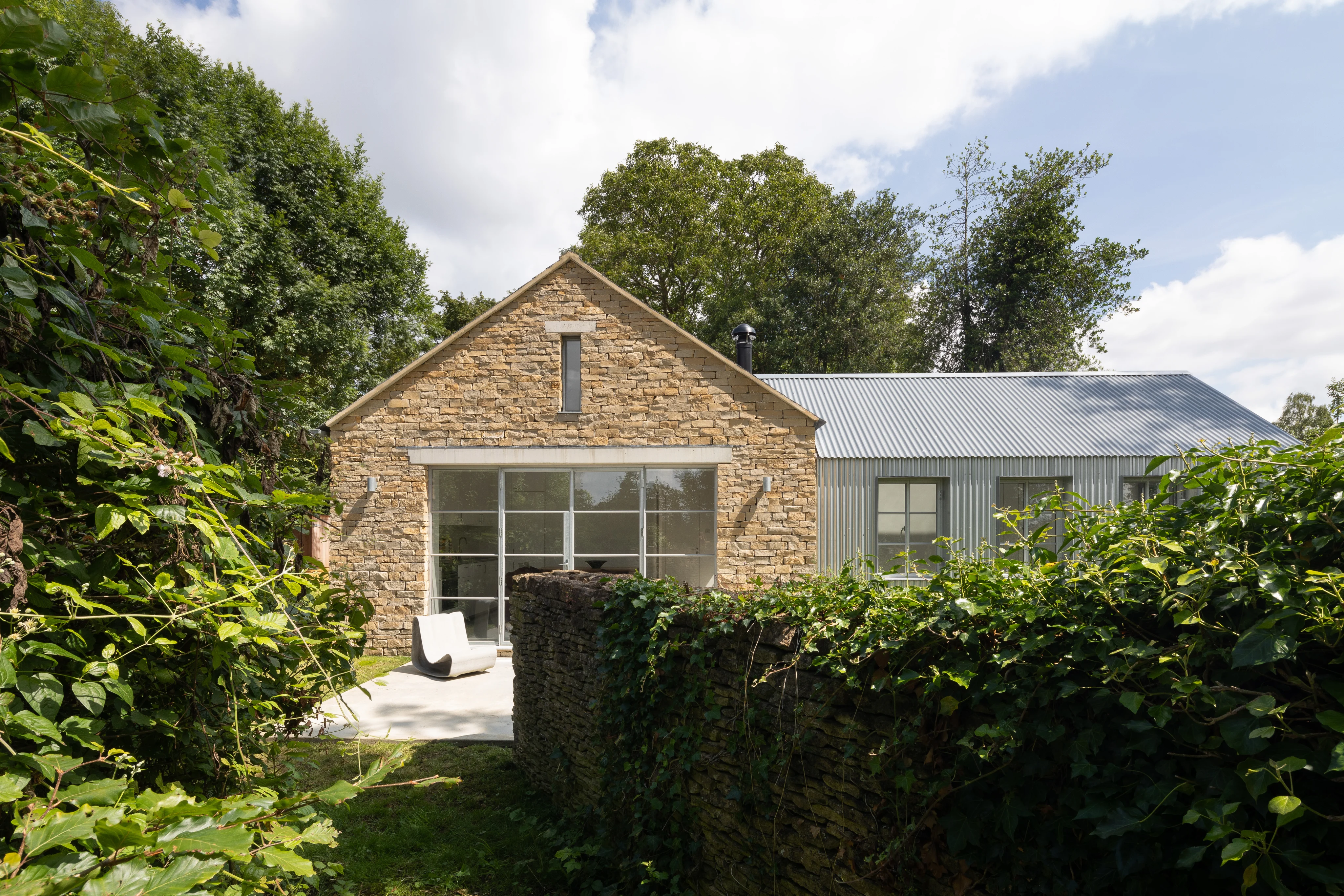
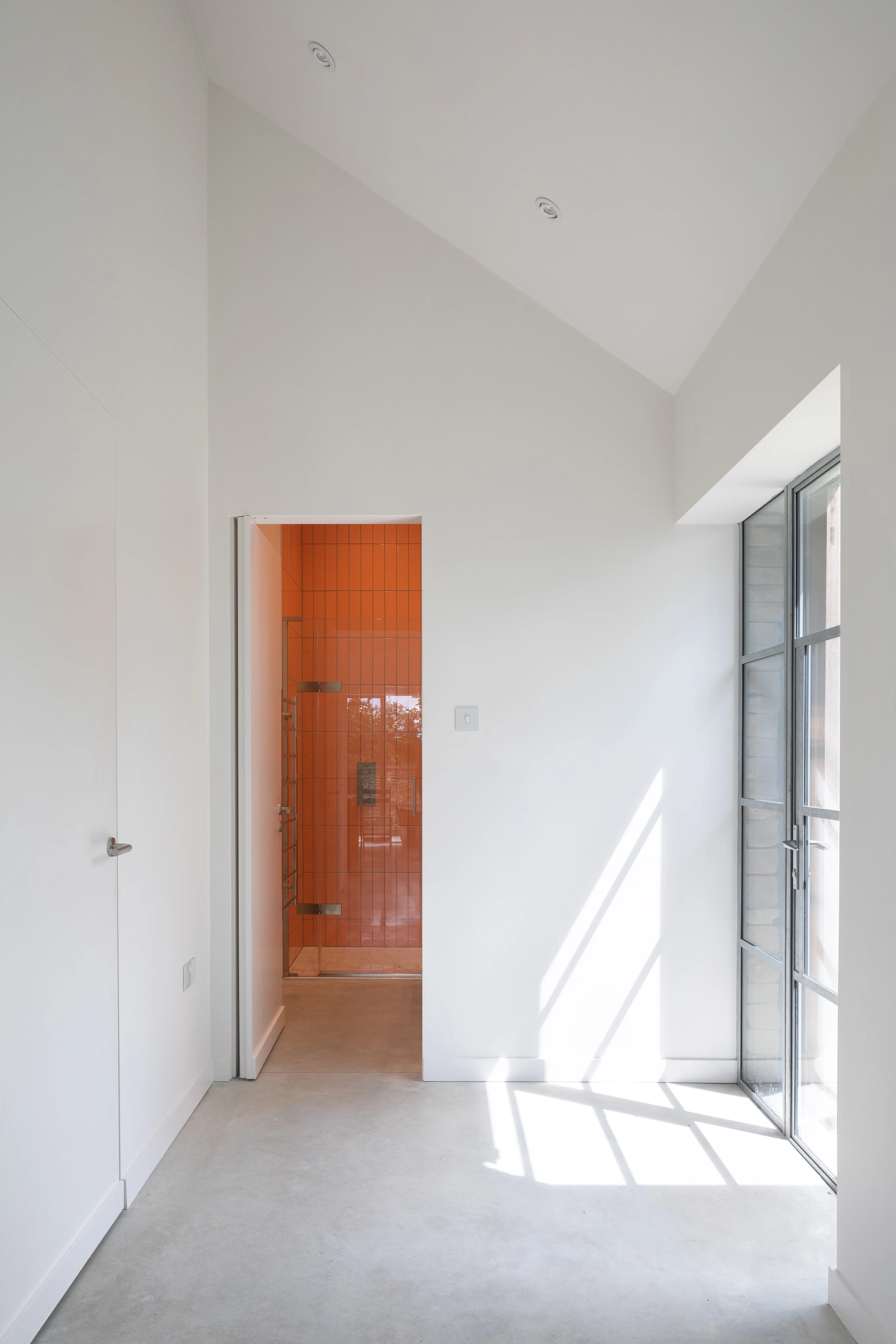
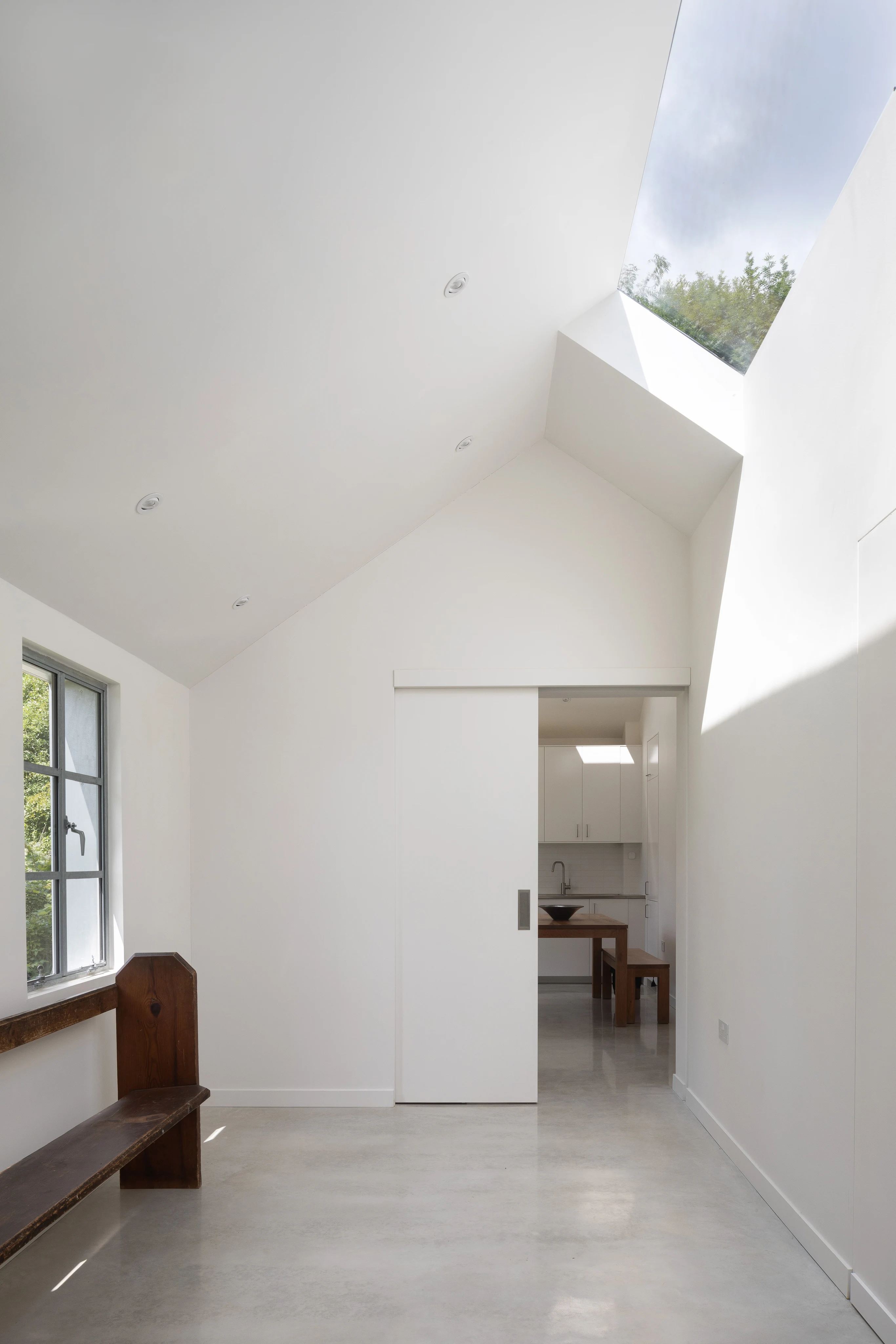
Set apart from the historic buildings, screened by mature trees and hedgerows, a new outbuilding completes the ensemble. Its architecture – an arrangement of pitched-roof volumes in open-jointed Cotswold stone and galvanised corrugated sheet cladding – responds to its surroundings with quiet confidence. Galvanised doors and windows, together with timber-clad sliding doors whose mechanisms are left deliberately visible, unite craftsmanship with functional clarity. Guest bedroom, home office and ancillary spaces find their place here without burdening the listed fabric.
What distinguishes Studio Cottage goes beyond individual architectural achievements. It is the collaboration: the passion of project architect John Ashton, the expertise of local craftspeople, the vision of an owner who slept in a woolly hat for years to understand the essence of this place before passing it on. And, not least, the conviction that contemporary glass architecture does not work against history but opens a new dimension within it. The link building with frameless sliding windows by Sky-Frame stands as a testament to this: a transparency that unites inside and outside, old and new, memory and present in a single, clear view.
January 2026
Reference
January 2026
Reference

January 2026
Reference
